

Just when you think you’ve done everything right, a water leak can turn your world upside down. Understanding how to file a successful insurance claim is imperative for mitigating financial loss. In this post, you will learn the step-by-step process to ensure your claim is both thorough and effective. You’ll find valuable tips on documenting the damage, communicating with your insurer, and knowing when water damage and mold are covered by insurance. Let’s dive in and get your claim on track!
Uncovering the Reasons Behind Claims Denials
Understanding why an insurance claim may be denied can reveal critical insights that may influence your approach to filing. Many claims are rejected due to misunderstandings regarding average policy payout, insufficient documentation, or missed deadlines. Familiarizing yourself with these factors allows you to better navigate the claims process and increase your chances of approval.
Top Reasons Insurance Claims Are Rejected
Insurance claims can be denied for several reasons, including lack of evidence, policy exclusions, failure to report damages promptly, or inaccuracies in the claim form. Sometimes, issues arise due to pre-existing conditions or not meeting required maintenance standards. Thoroughly reviewing your policy can help you identify potential pitfalls before submitting your claim.
How to Avoid Common Pitfalls
Preventing claims denials hinges on your preparation and understanding of your policy’s specifics. Gather all required documentation, including photographs of the damage, repair estimates, and maintenance records. Be diligent in maintaining open communication with your insurance adjuster, ensuring that all your claims inform them is accurate and complete.
Every detail matters when submitting an insurance claim. Double-check forms for any discrepancies, as an incorrect date or omitted information may lead to an automatic denial. Establish a timeline for documenting damages and repairs, as this will provide crucial evidence to support your case. Consider reaching out to a claims advocate or a legal expert if you feel overwhelmed, as professional guidance may illuminate critical steps you might be overlooking. By being proactive and thorough, you can significantly bolster your chances of a successful claims process.

Documenting the Damage Like a Pro
Accurate documentation is a key component in making a successful water leak insurance claim. Start by compiling a thorough record of all damage, keeping in mind that insurance adjusters rely on your evidence. Use checklists and detailed descriptions to present your case convincingly. For more guidance, consider checking out the 4 Mistakes to Avoid When Making a Water Leak Insurance Claim.
The Essential Checklist for Effective Documentation
Compile an important checklist to guide your documentation process. Include items such as the date of the leak, local weather conditions, the extent of the damage, and any actions you’ve taken to mitigate the issue. This organized approach not only simplifies the submission process but also ensures all relevant details are covered to strengthen your claim.
Capturing Evidence: Photos, Videos, and Notes
Visual evidence can significantly enhance your claim. Take high-quality photos and videos of all damage, noting specific details that illustrate the extent of the problem. Utilize timestamps on photos to provide context, and maintain a running log of conversations with contractors or insurance agents. This comprehensive approach equips you with a robust presentation of your case.
Including dated photos from various angles and close-ups can help convey the severity of the water damage. Videos can serve to demonstrate problematic areas, such as swollen flooring or discolored walls, adding a powerful visual element. Notes detailing the timeline of events, including when you first discovered the leak and any temporary measures taken, can underscore your diligence in addressing the issue promptly. Together, these elements create a compelling narrative that supports your claim and increases your chances of a successful outcome.
Organizing Your Claim Submission Strategy
Your approach to organizing the submission strategy can significantly impact the success of your water leak insurance claim. Start by collecting all relevant documents, including photographs, repair estimates, and any previous correspondence with your insurance provider. A clear timeline of events, highlighting when the leak was discovered and the immediate actions taken, adds context. This well-structured information ensures that your insurer easily navigates your claim and understands the situation’s urgency and severity.
Navigating the Claims Process Step-by-Step
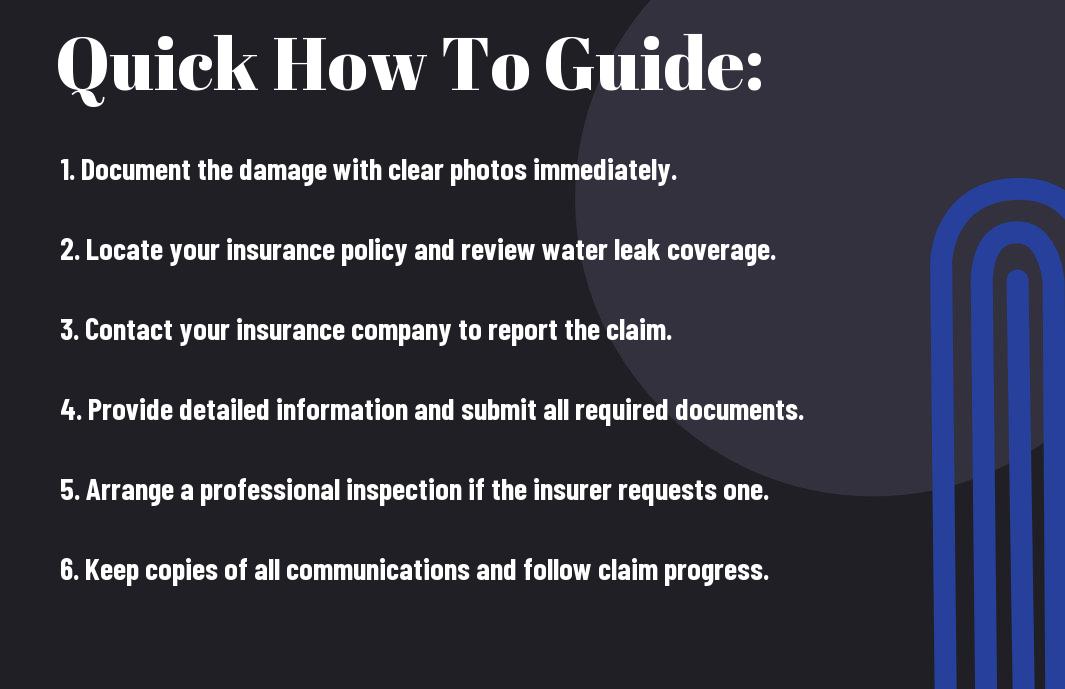
Breaking the claims process into manageable steps can make the entire experience less daunting. Follow this structured approach:
Claims Process Steps
| Step 1 | Report the leak to your insurance provider immediately. |
| Step 2 | Document the damage with photos and notes. |
| Step 3 | Get repair estimates from professionals. |
| Step 4 | Submit your claim with all collected documentation. |
| Step 5 | Follow up with your insurer for any updates or further information required. |
How to Craft a Compelling Claim Narrative
Developing a persuasive claim narrative is vital to your success. Your narrative should clearly explain the leak’s origin, the damage incurred, and your immediate responses to mitigate further loss. Use specific details and incorporate any expert opinions or assessments to fortify your position. A compelling narrative not only helps your adjuster understand the full scope of the incident but also showcases your proactive approach in handling the situation.
Including vivid descriptions of the events surrounding the leak can help evoke empathy from the claims adjuster. For instance, explain how the unexpected leak not only caused damage to your property but also disrupted your daily life. Details like these create a more personal connection to the claim, enhancing its overall impact. Incorporate estimates, photographs, and receipts to add weight to your narrative, illustrating the seriousness of your situation and supporting your request for compensation clearly and concisely.
Engaging with Your Insurer: The Art of Advocacy
Advocating for your interests during the claims process requires clear communication and a proactive approach. Building a rapport with your insurer can facilitate a smoother experience, allowing you to convey your concerns effectively. Be persistent but polite, treating your adjuster as a partner rather than an adversary. Demonstrating your understanding of the policy details and providing comprehensive documentation will bolster your position during discussions. Developing a cooperative relationship can lead to a more favorable outcome and expedite the resolution of your claim.
Effective Communication Tactics with Adjusters
Establishing effective communication with adjusters enhances your chances of a successful claim. Use concise language to explain your situation, focusing on facts and relevant details. Document each conversation, including names, dates, and key points discussed, to create a clear record. When you reach out, prioritize professionalism and approachability, which helps build trust and encourages cooperation from the adjuster. Demonstrating preparedness by referencing your policy’s specifics or related claims can also reinforce your case during discussions.
When and How to Escalate Unresolved Issues
Should your claim be stalled or denied without sufficient justification, escalation becomes necessary. Begin by formally requesting a thorough review of your claim through written communication, detailing your concerns and referencing your policy. If responses remain unsatisfactory, consider escalating the issue to a supervisor, as they may have the authority to address your concerns more effectively. Document all interactions while clearly articulating your expectations for resolution to keep the dialogue focused and productive.
In situations where unresolved issues persist, maintain a systematic approach to escalation. This starts by reiterating your claim history in a formal letter to a senior claims manager, emphasizing the points of contention and any discrepancies noted in earlier communications. You might also seek assistance from a claims advocate or your state’s insurance commissioner if problems remain unaddressed. By remaining organized and assertive, you reinforce your stance and elevate your case to the attention it deserves, which may ultimately result in a positive outcome.

Maximizing Your Settlement: Insider Tips
Securing the best possible settlement involves strategic thinking and a proactive approach. Here are several insider tips to maximize the value of your claim:
- Document every detail of the damage thoroughly.
- Prepare a comprehensive list of all related expenses.
- Stay persistent in follow-ups with your insurer.
- Keep clear records of all communications.
- Consult with a public adjuster if necessary.
Recognizing these strategies early can make a significant difference in the outcome of your claim.
Understanding the Adjuster’s Perspective
Your insurance adjuster faces a range of pressures, which often influences their assessment of your claim. They aim to protect the insurance company’s financial interests while adhering to guidelines and policies. By understanding their perspective—where they may prioritize cost control and risk management—you can better frame your claim to address their concerns and demonstrate the validity of your request for compensation.
Strategies for Negotiation and Finalizing Claims
Negotiating your claim effectively requires a combination of confidence, research, and organizational skills. Start by knowing your policy inside out, and ensure you’re aware of the specifics regarding coverage limits and the types of damages included. Prepare for negotiations by gathering evidence, such as photographs, expert reports, and repair estimates which lend credibility to your claim. Be prepared for back-and-forth discussions, and don’t shy away from advocating for the full scope of damages. Remaining composed yet assertive during these conversations instills confidence in your case.
Engaging in negotiations with your insurer might feel daunting, but armed with the right information, you can approach these discussions strategically. For instance, if your initial assessment falls short of covering repair costs, provide detailed estimates from licensed contractors to underscore the necessity of the expenses. Highlight any unexpected damages or property losses that arose due to the leak. By painting a clear picture of your situation, you can justify your request for a higher settlement. Effective negotiation often hinges on professional communication; maintain a firm yet polite demeanor while advocating for your rights.
To wrap up
With these considerations, you can improve your chances of making a successful water leak insurance claim. Start by documenting the damage thoroughly and gathering all necessary evidence to support your case. Be proactive in communicating with your insurance provider while ensuring that you follow all required procedures. For more detailed guidance, check out this helpful resource on How to Make a Successful Water Leak Insurance Claim. By taking these steps, you can navigate the process more effectively and work towards a favorable resolution.
FAQ
Q: What are the first steps I should take immediately after discovering a water leak in my property?
A: As soon as you discover a water leak, the first step is to stop the source of the leak if possible, such as turning off the main water supply. Next, document the situation by taking photos or videos of the damage and the leak itself. It’s also important to notify your insurance company as soon as possible to report the incident. Keep detailed records of all communications with your insurer, including dates and times, as well as any expenses incurred due to emergency repairs.
Q: What kind of documentation do I need to prepare for my water leak insurance claim?
A: For a successful water leak insurance claim, you will need to gather several types of documentation. This includes detailed photographs of the damage, a summary of any temporary repairs you made to prevent further damage, and any estimates or invoices for repairs from licensed professionals. Additionally, you’ll want to collect any correspondence with your insurance company and create a written record of all conversations regarding your claim. Having organized documentation will help streamline the claims process.
Q: How long does the water leak insurance claim process typically take, and what can I expect during this time?
A: The duration of the water leak insurance claim process can vary widely based on factors like the complexity of the claim, the insurance company’s policies, and any required investigations. Typically, initial assessments may take a few days to a couple of weeks. After filing the claim, you should expect an adjuster to review the damages, which could involve visits to your property and discussions about necessary repairs. Communication is key during this time; stay in contact with your insurer to stay updated on the progress of your claim.